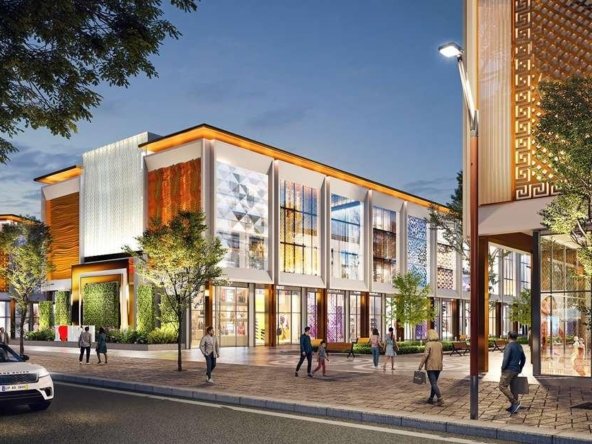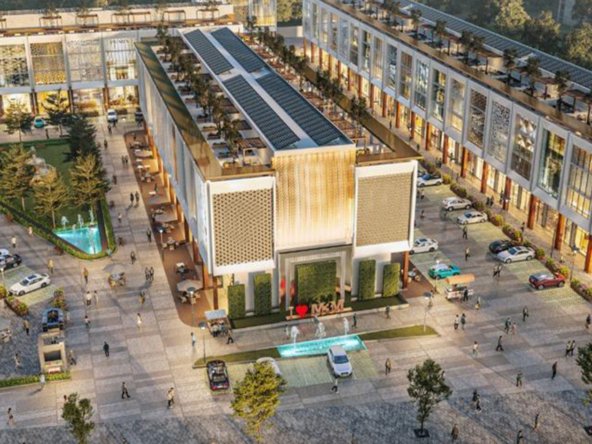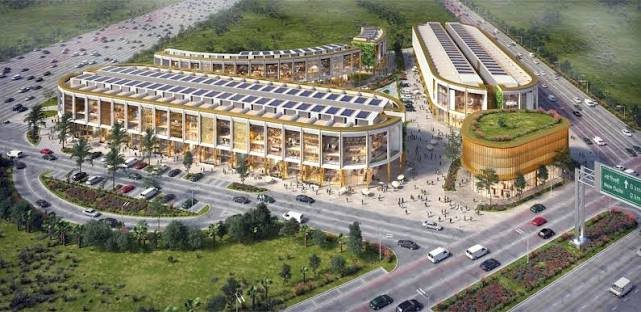
Every commercial project pitch leads with a big footfall number. M3M 114 Market’s is genuinely striking — over 30,000 daily visitors projected. But footfall projections are only useful if you understand where that number actually comes from.
Where the Footfall Claim Comes From
The project sits directly on the 150-meter-wide Dwarka Expressway, at what’s described as the literal Delhi-Gurgaon border — reportedly the first SCO project positioned specifically to capture footfall from the Delhi side of that boundary. Proximity to the India International Convention Centre (IICC), described as Asia’s largest convention hub, adds a second, genuinely distinct footfall source beyond regular commuter traffic.
That combination — border-crossing commuter traffic plus convention-driven visitor traffic — is a meaningfully different demand profile than a typical high-street SCO project relying purely on surrounding residential density. It’s worth understanding which of these two sources you’re actually betting on when you evaluate a specific unit’s positioning within the project.
The Residential Catchment Behind the Numbers
Beyond the expressway and convention centre traffic, the project cites a residential catchment exceeding 1.25 lakh people and roughly 25,000 families in the surrounding area. For SCO investors, this dual-catchment structure — transient expressway/convention traffic plus a genuine residential base — reduces dependency on any single demand driver, which is generally a healthier position than a project relying entirely on one source.
Understanding the SCO Format Itself
For buyers newer to commercial real estate, Shop-Cum-Office (SCO) plots differ meaningfully from mall-based retail units. You get 100% land ownership rather than a strata-titled unit within a larger structure, and typically G+4 storey construction rights on your specific plot. That ownership structure generally offers more flexibility for resale, leasing, or redevelopment down the line compared to standard mall retail, though it also means you’re responsible for your own building maintenance rather than relying on a mall management company.
What the Mixed-Use Format Actually Enables
The project supports combinations like office-plus-retail or retail-plus-restaurant within a single unit — a flexibility that matters more than it initially sounds. A single SCO plot that can house a ground-floor café with office space above, for instance, diversifies your rental income across two tenant types rather than betting entirely on one use case.
Detailed plot sizing and current availability are listed on the M3M 114 Market Dwarka Expressway project page, useful for comparing specific unit dimensions against your budget and intended use.
Connectivity: The Numbers Worth Verifying Yourself
IGI Airport access is commonly cited at 7-10 minutes, alongside proximity to SPR, CPR, and NH-8. These are impressive numbers on paper, and Dwarka Expressway genuinely has improved these connections in recent years. Still, verify actual drive times during peak business hours through a personal site visit — projected connectivity and daily commercial reality can diverge, especially around a high-traffic convention centre during major events.
The Comparison Investors Should Actually Run
M3M has delivered prior commercial projects in the same broader category, including M3M Broadway and projects along 65th Road, per several listings. Before committing capital to 114 Market specifically, ask the developer directly how those earlier projects’ actual occupancy and rental yields have performed post-handover — track record on comparable prior SCO launches tells you more about realistic returns than any footfall projection for a not-yet-operational project.
Risk Factors Worth Naming Directly
SCO investments carry occupancy risk that mall-format retail sometimes mitigates through centralized leasing and marketing. As an individual SCO plot owner, you’re generally responsible for attracting and retaining your own tenants, which means the project’s overall footfall numbers don’t automatically guarantee your specific unit’s occupancy. Location within the project — corner plots, main boulevard frontage versus interior positioning — matters significantly more in SCO formats than in mall-based retail.
Frequently Asked Questions
- What is the total land area of M3M 114 Market?
Reports place the project’s land area between roughly 3.82 and 4 acres, depending on the specific listing and phase referenced. - What is the SCO format, and how does it differ from mall retail?
SCO stands for Shop-Cum-Office, offering 100% freehold land ownership and independent building rights, unlike strata-titled mall units that operate under centralized mall management. - How close is the project to the Delhi border?
The project is described as being at the Delhi-Gurgaon border, roughly 0 km from Delhi, making it the first SCO project from the Delhi side of Dwarka Expressway. - Is parking available at M3M 114 Market?
Yes, the project reportedly offers ample surface parking to support the high projected footfall from both commuters and convention centre visitors. - What kind of businesses would suit an SCO plot here?
The mixed-use format supports retail, offices, cafés, restaurants, and showrooms, making it flexible for a range of business types seeking high-visibility, high-footfall locations.