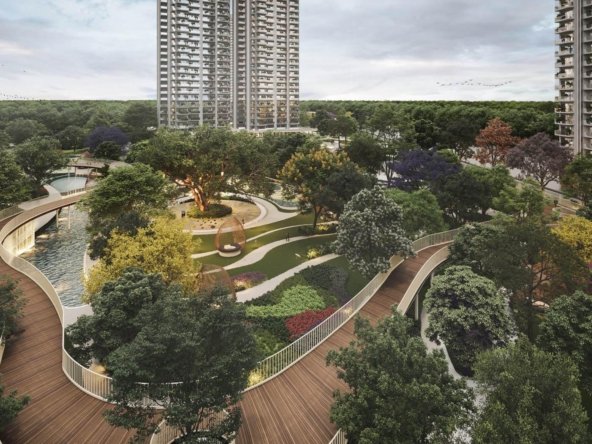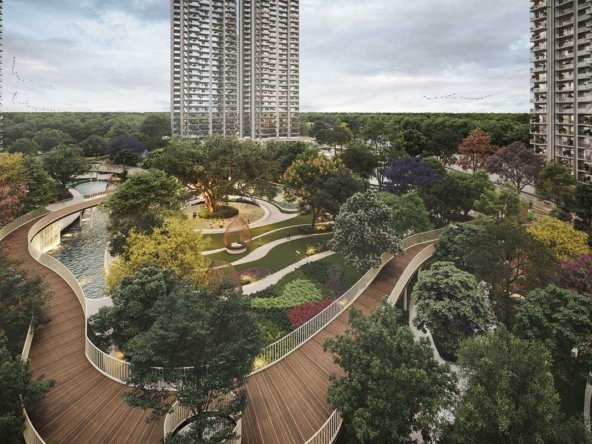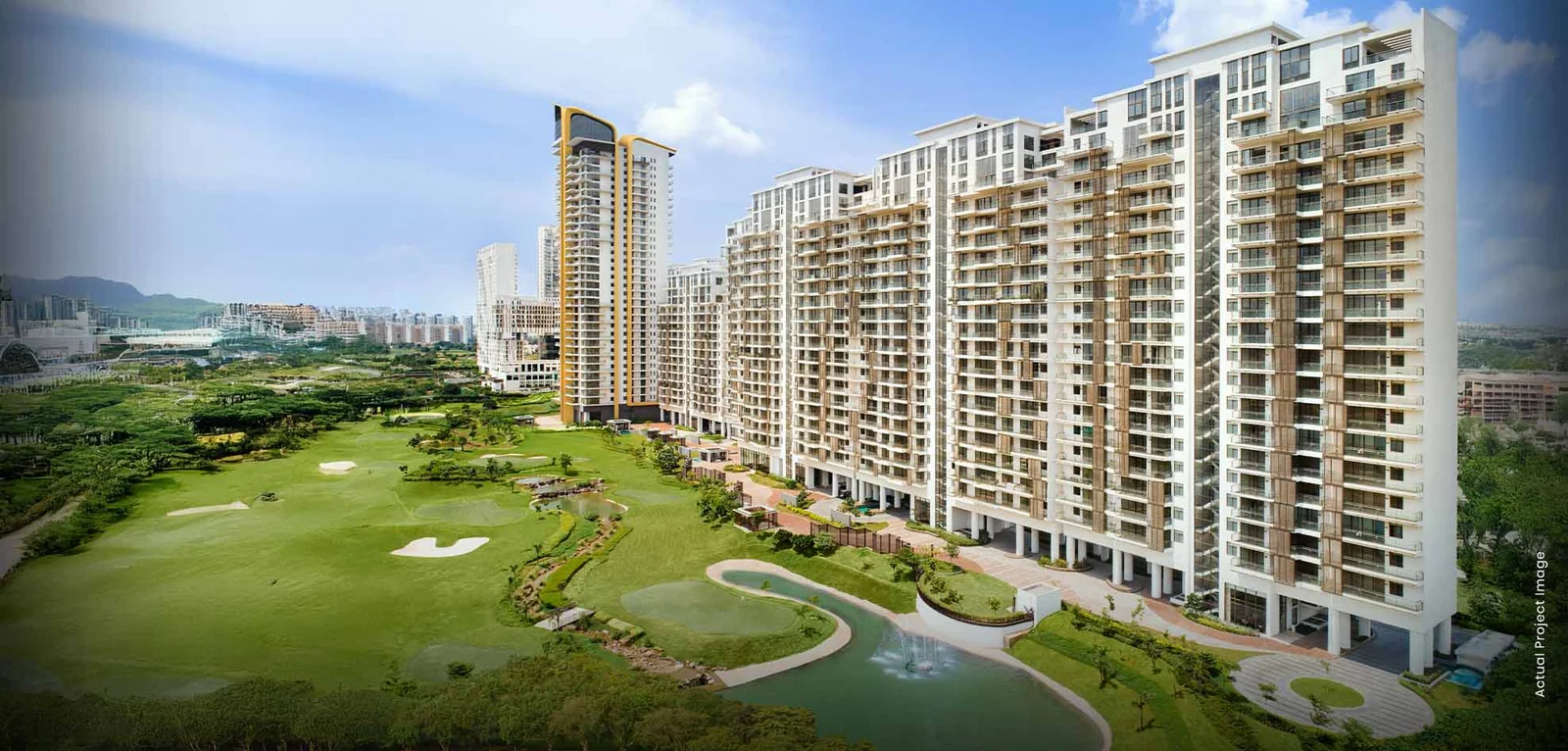
Strip away the “vertical forest” language for a moment. What does M3M Forestia North actually offer an investor evaluating pure numbers — connectivity, tenant demand, and appreciation drivers?
The Triple-Expressway Claim, Verified
Located in Sectors M9, M10, and M11 of Manesar, the project sits directly on NH-48 (the Delhi-Jaipur Highway), with reported access to the Dwarka Expressway and the developing KMP Expressway as well. For an investor, multi-highway access matters specifically because it broadens your potential tenant pool beyond a single employment corridor — professionals working in IMT Manesar, Gurgaon’s established business districts, and even parts of Delhi’s outer ring can all realistically commute from this location.
That breadth of accessible employment hubs is a genuine differentiator versus single-highway-access projects, where tenant demand depends entirely on one specific commercial corridor’s continued growth.
Industrial-Belt Tenant Demand: The Underrated Driver
IMT Manesar’s continued industrial growth supports a specific, durable category of rental demand — mid-to-senior industrial and manufacturing professionals seeking premium housing near their workplace, rather than purely speculative or purely IT-sector tenant demand. This is worth understanding as a distinct demand driver from Gurgaon’s more commonly discussed Cyber City / IT-corridor rental market.
Diversified tenant demand sources — industrial professionals plus broader NCR commuters given the multi-highway access — generally provide more resilient occupancy than a project dependent entirely on a single industry’s hiring cycles.
Scale as a Value Signal
The project sits within the broader 140-acre Gurgaon International City township, which includes M3M’s own residential phases alongside independent low-rise developments by Smartworld and a dedicated industrial hub. Township-scale developments of this size typically signal sustained, multi-year developer commitment to the surrounding infrastructure — schools, retail, roads — rather than a single isolated tower dependent entirely on outside infrastructure development to succeed.
What the Metro Timeline Actually Means for Appreciation
A proposed 35.2 km metro line for the corridor is mentioned across several sources — genuinely significant if and when it materializes, since metro connectivity has historically been one of the strongest drivers of NCR residential appreciation in comparable corridors. The appropriate way to weigh this in your investment model is as reasonable upside potential contingent on infrastructure delivery, not as a guaranteed near-term catalyst. Track the project’s official status through government transport authority announcements rather than developer marketing material.
For current unit pricing and configuration data to model your specific return scenario, m3m forestia north provides project-level detail worth cross-referencing against comparable Manesar-belt developments.
Comparing Against Nearby Manesar Projects
M3M has launched multiple Forestia phases — North, East, and West — within the same broader township, alongside comparable projects from other developers in the Manesar corridor. Before committing capital, request a comparative table showing current per-sq.-ft. pricing and rental rates across these sister phases and nearby competing developments. Meaningful pricing divergence between phases within the same 140-acre township, if it exists, is worth understanding before you commit to one specific phase over another.
Rental Yield Realism
Given the project’s still-developing infrastructure — metro connectivity pending, some social infrastructure still described as upcoming — early-phase rental yields are likely to be more modest than in fully established corridors like central Cyber City. This is typical of emerging township investments generally: lower entry pricing and yield in early phases, with the thesis being that both improve as the surrounding infrastructure matures over a multi-year horizon.
The Honest Risk Assessment
Township-scale developments carry a specific risk worth naming directly: your investment’s performance depends partly on the developer successfully executing surrounding phases, not just your own tower. M3M’s established track record in North India provides some reassurance here, but it’s worth researching how comparable earlier M3M township developments have performed post-delivery before assuming this pattern repeats identically.
Frequently Asked Questions
- What is the primary tenant demand driver for M3M Forestia North?
Industrial and manufacturing professionals working in nearby IMT Manesar represent a distinct, durable demand source, alongside broader NCR commuters benefiting from the project’s multi-highway access. - Is the proposed metro line confirmed or still in planning?
The 35.2 km metro line referenced in several sources should be treated as proposed infrastructure pending official government confirmation, not a guaranteed near-term addition. - How does township scale affect investment risk?
Township-scale developments depend partly on successful execution of surrounding phases by the same developer, which is worth researching through the developer’s track record on comparable prior projects. - What rental yield can investors realistically expect early on?
Given still-developing surrounding infrastructure, early-phase yields are likely more modest than in established corridors, with the investment thesis built around improvement as the area matures. - How does Forestia North compare to Forestia East for investment purposes?
Both are phases within the same broader township with differing specific locations and amenity packages — investors should request comparative pricing and rental data across both before choosing.